
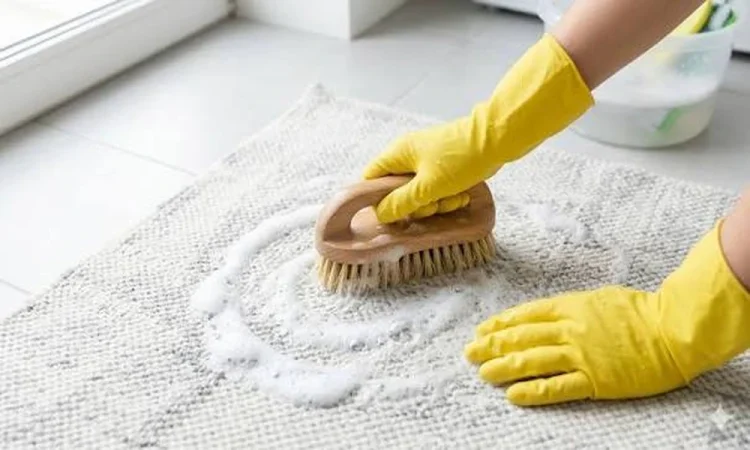
When a carpet mark returns after treatment, repeating the same cleaning process is not automatically the best next step. First establish what returned, when it appeared and what was previously applied. That information can change the choice between a suitable extractor rental, a different approved treatment and examination by a carpet-care professional.
Consider a Toronto living room where a patch beside a favourite chair looks better after every cleaning attempt, then draws attention again. It might be tempting to buy a stronger product or book a more powerful machine. Yet neither choice answers the underlying question: is this a new deposit, an incompletely resolved mark or a change in the carpet itself?
The return of a mark is information
Begin with the timing. Did the patch become visible while the carpet dried, after people resumed using the room or following another identifiable spill? Do not force an answer if nobody knows. Even an honest description of uncertainty is more useful to a cleaner than a confident diagnosis based on the mark’s colour.
Compare the area under similar lighting. A photograph taken with afternoon sun across the pile can look different from one taken under a ceiling light. This does not mean photographs are useless; it means they are records of appearance under specific conditions. Include a wider view that shows where the patch sits in relation to furniture and normal foot traffic.
Describe texture and shape without turning them into a diagnosis. A stiff patch, a broad dull area and a sharply defined pale spot are useful observations to share. They do not establish which chemical or machine will fix the issue. Be especially cautious about assuming that a lighter area needs more cleaning simply because it differs from the surrounding carpet.
Ask whether the everyday source has actually changed. A chair location, a recurring drink spill or material transferred from footwear may deserve attention alongside the cleaning method. This is a practical investigation of the room’s use, not a reason to blame its occupants. The cleaning decision becomes clearer when a repeated new event is separated from an old unresolved result.
More product adds another unknown
Gather the names of products already used and, where known, how they were applied. Keep the containers or photograph their labels. An account such as carpet spray followed by another cleaner leaves important details missing. Do not reconstruct a precise mixture from memory if it is uncertain; explain what is known and what is not.
The Carpet and Rug Institute’s cleaning guidance discusses suitable products, pretesting and the possibility of stains reappearing or rapid resoiling. Its guidance supports a measured response: the choice of product and method matters. It does not establish the cause of a particular household patch from a description alone.
A stronger concentration is not a neutral adjustment. Use products only as directed for the carpet and equipment, and do not combine cleaners in the hope that one will correct another. If previous treatments are unknown, that uncertainty is a reason to seek qualified advice. Adding a new substance can make the eventual assessment more complicated.
Keep homemade recipes out of the decision unless the relevant manufacturer explicitly approves them for the application. A familiar household ingredient is not automatically suitable for a textile, its backing or an extractor. Advice intended for one material should not be transferred to another simply because both surfaces are called carpet.
The treatment decision is also where equipment enters the discussion. An extractor is one part of a process, and its rental period should not decide which process the carpet receives.
A useful equipment enquiry begins with the intended process. Identify the carpet where possible, provide its care instructions and explain the recurring mark. If a qualified cleaner recommends a specific method, clarify who will perform it and what equipment that method requires. A rental reservation should follow that understanding, rather than substituting for it.
Ask the provider about the actual machine and supplied attachments, including approved cleaning solutions and operating instructions. A machine’s ability to recover liquid is one capability; it is not a promise to reverse wear, permanent staining or colour change. Clear expectations help prevent repeated passes from becoming an attempt to force a result the process cannot deliver.
For the equipment part of that research, Drying Equipment’s carpet water extractor is a rental category available to investigate. Confirm current suitability and arrangements directly. Treat the product page as information about an equipment option, without reading a guaranteed outcome for a recurring spot into the listing.
The scope may be smaller than a full-room extraction. A professional may need to identify the mark first, or the manufacturer may direct a different approach for the material. That preliminary step can still be worthwhile even if it means the rental is postponed. The purpose is an appropriate treatment, not completing the original booking idea at any cost.
Judge success after the area has settled
Follow the approved process through its evaluation stage. Immediate appearance during cleaning is only one observation. Allow the material to be assessed at the point specified by the care instructions or professional, and compare it with the surrounding area under consistent conditions. Avoid promising that a particular number of passes or hours will produce a uniform finish.
Agree on a stopping point if the result is unexpected. That might mean contacting the carpet manufacturer or arranging an in-person assessment, rather than applying another product. A repeated treatment that produces the same unexplained change is not generating much new information. Continuing can consume time while leaving the actual problem unidentified.
Some household marks call for acceptance of a material limitation or a considered repair. Others can be addressed once the right method is established. The worthwhile pause is the one that distinguishes those possibilities. If the next cleaning attempt cannot be explained more clearly than the last, professional identification is a sensible next investment.