Why Professional Tree Removal in Gold Coast Protects Far More Than Just the Property

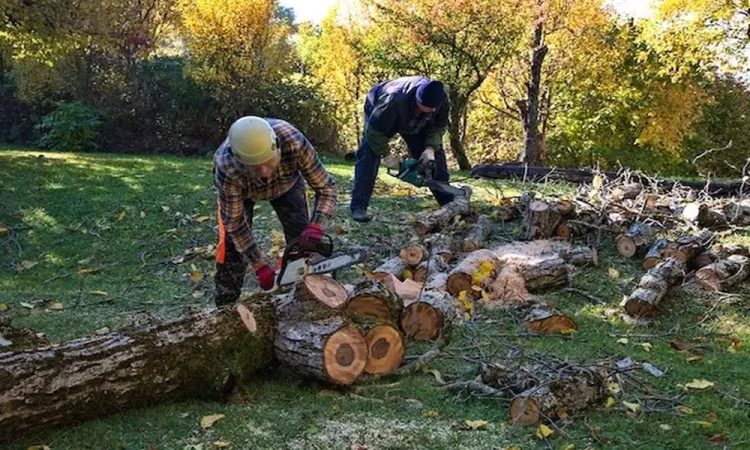
Nobody books a tree removal on a calm Tuesday morning when nothing is wrong. The call almost always comes after something – a branch through a fence during the last storm, a neighbour’s complaint about encroachment, a crack in the driveway that finally got traced back to a root. By that point, the job is already harder than it needed to be. The tree is bigger. The root has gone further. The canopy has grown into something it should not be touching. Tree removal in Gold Coast carried out before a situation becomes urgent is a different job entirely – less complex, less risky, and far less likely to damage what surrounds it.
What the Approval System Actually Looks Like
Most Gold Coast homeowners discover the council approval requirement for tree removal at the worst possible time. The tree needs to come down. The arborist is booked. Then somebody asks whether a development application has been lodged, and it has not, and the job stops. What most people do not know is that a tree does not need to be healthy to require approval. A visibly dying tree, a storm-damaged tree, a tree with documented structural failure – these can still require formal assessment before removal proceeds lawfully. Some Gold Coast species carry protection overlays that apply regardless of the tree’s condition or the owner’s circumstances. Getting this confirmed before booking work is not administrative caution. It is what separates a completed job from a council notice.
The Confined Access Reality Nobody Shows You Online
Videos of tree removal show open paddocks, clear sky, and trees that fall neatly. Most Gold Coast residential removals look nothing like that. The tree is between a pool fence and a Colorbond boundary fence. The canopy is over a roof. There is a spa behind it, a powerline beside it, and the only access to the site is through a standard gate. Every section of canopy has to be rigged, cut, and lowered to the ground rather than dropped, because nothing within the fall zone can absorb the impact. The rigging system, the climbing gear, and the ground crew coordination required for that work is not what most homeowners picture when they imagine a tree coming down.
When the Stump Is Only Part of the Problem
Stump grinding removes the visible trunk to below ground level. It does not remove the root system. In Gold Coast conditions – warm, moist, with many species that regenerate aggressively from root material – the decision about what happens below the stump line matters. A large fig removed from a garden, with its root system left intact, will produce surface shoots from lateral roots for years after the trunk is gone. Tree removal in Gold Coast involving species known for root regeneration should include a discussion about what the remaining root mass will do, particularly when the cleared site is being used for paving, garden structures, or new planting that cannot tolerate competition from a root system that is technically still alive.
The Liability Gap in Powerline Work
This is the one that surprises people most. A tree service willing to work near powerlines without Energex line-clearance accreditation is not simply cutting a corner. They are performing work that is legally prohibited and that, in the event of a contact incident, exposes the property owner – not just the contractor – to liability. The homeowner engaged them. The homeowner allowed the work to proceed. That proximity to an energised conductor and the consequences of a contact event do not land on the unaccredited worker alone. Tree removal involving any component near Energex infrastructure must involve someone with the accreditation that makes the work lawful, and verifying that before work starts is the homeowner’s responsibility as much as the contractor’s.
Why Wet Season Removal Creates Site Damage Nobody Expected
Equipment brought onto saturated soil leaves marks that take a full dry season to disappear. Turf compacted by a wood chipper or small crane during a wet-season removal does not recover quickly. Root systems loosened in wet soil behave unpredictably under mechanical disturbance, sometimes affecting adjacent trees or structures in ways that dry-season removals do not produce. Arborists who schedule removal jobs into the dry season are not being precious about conditions. They are protecting the site from a secondary set of damage that the homeowner was not expecting to pay for.
Conclusion
Tree removal in Gold Coast rewards early action and penalises delay. The regulatory complexity, the confined access conditions of established suburbs, the powerline accreditation requirements, and the root system behaviour after removal all become more difficult to manage the longer a situation is left to develop. Property owners who engage experienced local arborists before a tree becomes a crisis consistently experience simpler jobs, fewer complications, and sites that recover cleanly once the work is done.