Wasp and Hornet Nests Near Your Home: A Kansas City Pest Control Guide to When to Wait, When to Worry, and When to Call

The phone calls pick up sharply in July. Someone spotted a small umbrella-shaped nest under the porch eave. Someone else noticed a gray football-sized shape in a tree along the property line and is not sure what they are looking at. A third caller went to mow the back acre and watched a stream of yellow jackets pour out of a hole in the ground. Kansas City pest control crews handle each of these calls differently, and the difference matters. Some nests can be left alone until the first hard freeze takes care of them. Others need to be addressed quickly, before someone gets hurt. Knowing which is which is the first thing a homeowner needs to figure out.
The Three Species Most Common in Kansas City Yards
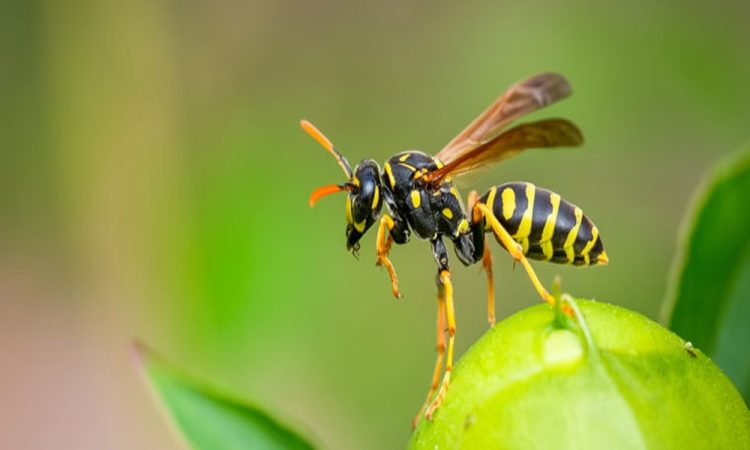
Paper wasps are the species most homeowners encounter first. The nests are open, umbrella shaped, and built under eaves, porch ceilings, deck rails, mailbox interiors, and the underside of patio furniture. The cells are visible from below and the colony usually stays small, typically fewer than two hundred adults at peak. Paper wasps are not aggressive away from the nest. Up close, they will defend.
Bald-faced hornets are technically a type of yellow jacket despite the name. The nest is the giveaway. A gray, papery, football to basketball-sized enclosed structure usually hanging from a tree branch, the corner of a shed, or the underside of a roof line. Bald-faced hornets are larger, faster, and more defensive than paper wasps. The colony can reach several hundred workers by late summer, and they react to vibration. Mowing under the tree, leaf blowing nearby, or running a power tool within twenty or thirty feet can trigger an attack without anyone touching the nest.
Yellow jackets in the more familiar sense are the species that nest in the ground. The colony lives inside an old rodent burrow, a void under a deck, a gap in a retaining wall, or any underground cavity that the queen finds suitable in early spring. The nest stays hidden until the population gets large enough that the steady traffic at the entry hole gives it away. Ground yellow jackets are the species most likely to send a Kansas City homeowner to the emergency room. The colonies grow to thousands of adults by late summer. They are aggressive, they respond to lawn equipment, and they will pursue a perceived threat for a longer distance than the other species in this region.
When a Nest Can Wait
A nest can usually be left alone if three things are true. The location is far enough from regular activity that no one is going to come within ten feet of it during the season. The species is on the less aggressive end of the spectrum, meaning paper wasps rather than hornets or yellow jackets. No one in the household has a known stinging insect allergy.
Paper wasps in the corner of an unused shed, on the back side of a detached garage, or under the eave of a barn on a property where that side of the building gets no foot traffic can often be ignored. The colony dies off after the first hard freeze in late October or November, and the queens that survive the winter rarely reuse the same nest. The empty nest can be knocked down in winter without any risk.
The same logic does not apply to bald-faced hornets or ground yellow jackets even at a distance. The activity radius is larger, the defensive response is faster, and the season is longer. A bald-faced hornet nest in a tree along the property line can pose a risk well into October.
When to Worry
A few situations move a nest out of the wait-and-see category and into the act-soon category. A nest near a door, window, walkway, deck, patio, garage entry, or anywhere the family routinely passes within ten feet. A nest where children, older adults, or pets spend time. A nest in or near a play structure. A nest at a property where someone has a known allergy to bee or wasp stings, regardless of severity. A ground yellow jacket colony anywhere in a regularly maintained yard.
The risk profile rises in late summer for reasons related to the biology of the colonies. Workers become more defensive as the season progresses. Resources outside the nest decline, which makes the colony more focused on protecting what it has. The yellow jacket scavenging that brings the species onto picnic plates and into open soda cans peaks in August and September. The Centers for Disease Control reports stinging insects as a recurring source of emergency room visits each summer, with anaphylactic reactions accounting for the most serious cases.
Why DIY Removal Often Goes Wrong
Hardware store wasp sprays work on paper wasp nests when the nest is small, the location is open, and the homeowner can spray from a safe distance at dusk when activity is lowest. The product has limits. Sprays often miss the inner cells where the developing brood survives, which allows new adults to emerge after the first round. They almost never penetrate the outer paper layer of a bald-faced hornet nest. They do not reach the depths of a ground yellow jacket burrow.
A more common pattern with DIY removal is partial elimination followed by an aggressive response from the surviving workers. Homeowners get stung pulling back from a nest they thought they had cleared. Ladders complicate the picture further when bald-faced hornet nests are at second-story height or higher.
When to Call
The clearest signals for professional help are species and location. Any bald-faced hornet nest, regardless of size. Any ground yellow jacket colony, regardless of how far the entrance is from the house. Any paper wasp nest within ten feet of a regularly used door, window, or seating area. Any nest accessible only by ladder. Any nest at a property where someone in the household has a known allergy.
ZipZap Termite & Pest Control handles each of these cases regularly across the Kansas City metro. The technicians arrive with the right protective equipment, identify the species before treatment, and use products and application methods matched to the nest type. Bald-faced hornet nests are treated through the entry hole with a residual product that the workers carry into the interior. Ground yellow jacket colonies are treated by application directly into the entrance, usually at dusk when most of the workers are inside. Paper wasp nests in accessible locations are handled with direct treatment and physical removal once the colony is dead.
A Practical Answer to a Common Summer Worry
A wasp or hornet nest near a home does not always require action, but the cases that do are the ones where waiting tends to go wrong. The difference comes down to species, location, and the people who use the space. If a nest near your home meets any of the conditions that move it into the call category, the right step is not a second trip to the hardware store. ZipZap Termite & Pest Control offers Kansas City pest control wasp and hornet removal across the metro, with a board-certified entomologist on staff and the experience to handle the cases homeowners should not be handling alone. Reach out to schedule a removal and find out exactly what you are dealing with before the next time someone walks past the nest.