

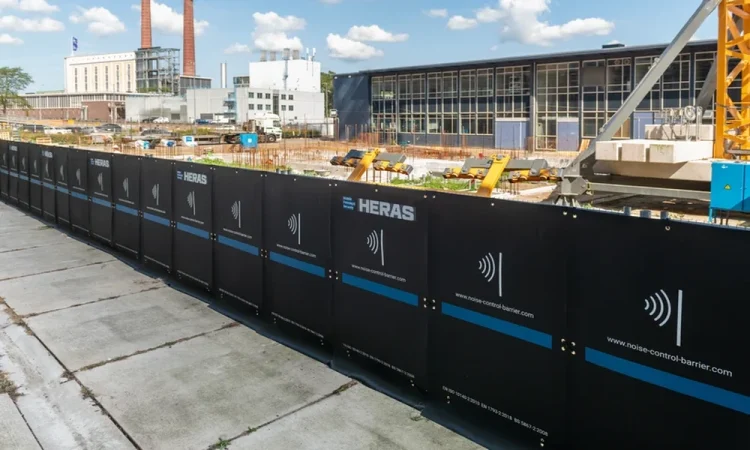
Construction sites are busy, fast-moving environments. There is constant activity, heavy machinery in operation, and multiple teams working at once. With all of this going on, two priorities tend to stand out: keeping people safe and managing noise effectively.
Barriers are often introduced as a solution for both. You will see them around site perimeters, near equipment, and along walkways. At a glance, they seem to solve multiple problems at once. However, their effectiveness depends on how and where they are used.
Understanding where noise absorbing barriers actually make a difference helps ensure they contribute meaningfully to both safety and noise control, rather than just being part of the setup.
The Dual Purpose of Barriers on Site
Barriers serve two main roles in construction environments.
The first is physical safety. They help separate workers from hazards, guide foot traffic, and prevent unauthorised access. This is critical in reducing accidents and maintaining order on site.
The second is noise control. Barriers can limit how much sound escapes from the site or travels between different zones within it.
While these roles overlap, they are not identical. A barrier that works well for safety may not automatically be effective for noise, and vice versa. Recognising this distinction is key to using them properly.
Where Barriers Improve Site Safety
From a safety perspective, barriers are most effective when they create clear, controlled boundaries.
They help define restricted areas, such as zones with heavy machinery or ongoing lifting operations. Keeping workers and visitors out of these spaces reduces the risk of accidents.
Barriers also guide movement. Designated walkways with proper separation from vehicle routes make it easier for people to navigate the site safely.
In addition, perimeter barriers prevent unauthorised entry. This is particularly important in urban areas, where construction sites are close to public spaces.
In all of these cases, visibility and durability matter. Barriers should be clearly marked, stable, and able to withstand the demands of a busy site.
Where Barriers Help with Noise Control
When it comes to noise, barriers are most effective along the path between the source and the receiver.
For example, placing barriers around particularly loud equipment can reduce how much sound spreads across the site. This benefits workers who are not directly involved with that equipment.
Perimeter barriers are also useful in limiting noise that reaches surrounding areas. In densely populated environments, this can help reduce disturbance to nearby residents and businesses. However, barriers do not eliminate noise entirely. They reduce direct transmission, which can still make a noticeable difference when combined with other measures.
Placement Matters More Than Presence
Simply having barriers on site is not enough. Their impact depends heavily on placement.
For noise control, barriers should block the direct line of sight between the source of the sound and the area you want to protect. If sound can travel over or around the barrier easily, its effectiveness drops.
Height and continuity are also important. Gaps between panels or barriers that are too low can allow sound to pass through with minimal reduction.
For safety, placement should align with actual site activity. Barriers need to reflect how people and equipment move, not just how the site looks on paper.
Regular reviews of barrier placement are essential, especially as construction progresses and layouts change.
The Limits of Barriers
It is important to be realistic about what barriers can and cannot do.
For safety, barriers reduce risk but do not remove it completely. They need to be supported by proper training, signage, and supervision.
For noise control, barriers are only one part of the solution. Sound can reflect off other surfaces, travel through structures, or bypass barriers entirely if not properly contained.
Relying solely on barriers without addressing noise at the source often leads to limited results.
Combining Barriers with Other Measures
The most effective approach is to integrate barriers into a broader strategy.
For safety, this includes clear protocols, personal protective equipment, and regular site inspections.
For noise control, combining barriers with source-level solutions makes a significant difference. This might involve:
- Using quieter machinery where possible
- Scheduling high-noise activities during less sensitive hours
- Installing enclosures or dampening materials around equipment
When these measures work together, barriers become far more effective.
Temporary vs Adaptive Use on Site
Construction sites are constantly evolving. What works in one phase may not be suitable in another.
Temporary barriers offer flexibility. They can be repositioned as work shifts from one area to another, ensuring that both safety and noise control remain consistent.
Adaptive use is key. Instead of setting barriers once and leaving them in place, adjusting them based on current activity ensures they continue to serve their purpose.
Common Mistakes to Watch For
A few common issues can reduce the effectiveness of barriers on site.
One is treating them as a box-ticking requirement. When barriers are installed just to meet basic expectations, their placement and condition may not be properly considered.
Another is poor maintenance. Damaged or unstable barriers can create safety risks and reduce noise control performance.
There is also the risk of over-reliance. Assuming that barriers alone will solve complex safety or noise challenges can lead to gaps in your overall strategy.
Being aware of these pitfalls helps maintain a more proactive approach.
Balancing Practicality and Performance
Space constraints, budget considerations, and project timelines all influence how barriers are used.
In tighter sites, it may not be possible to install large or extensive barriers. In these cases, focusing on critical areas delivers better results than trying to cover everything.
Choosing the right type of barrier for each purpose also matters. Some are designed for visibility and impact resistance, while others are built specifically for sound reduction.
Matching the solution to the need ensures that barriers perform as expected.
Final Thoughts
Barriers play an important role in both construction safety and noise control, but their effectiveness depends on thoughtful use.
They work best when placed strategically, maintained properly, and combined with other measures that address risks at their source. Rather than relying on them as a catch-all solution, treating barriers as part of a broader, well-planned approach leads to better outcomes.
In a dynamic construction environment, small adjustments in how barriers are used can make a meaningful difference. When done right, they contribute not just to compliance, but to a safer and more manageable site overall.